The 2026 ASEAN Data Roadmap: Why the Databricks Data Intelligence Platform is Malaysia’s Digital Backbone
The 2026 ASEAN Data Roadmap: Why the Databricks Data Intelligence Platform is Malaysia’s Digital Backbone

Kevin Boey
Why You Need to Read This Article?
If you’re a C-Suite leader, IT strategist, or HR director, this article is essential because it answers three pressing questions:
- What’s changing? The shift from cloud storage to intelligent data platforms—and why Databricks is central to this transformation.
- Why does it matter? Generative AI and governance are no longer optional; they define competitive advantage in 2026.
- What’s at stake? A severe talent gap threatens Malaysia’s MyDigital goals, and the article outlines actionable strategies to future-proof your workforce.
For the past five years, Malaysian enterprises have raced to adopt a “Cloud-First” strategy. As we approach 2026, that race has largely concluded. The infrastructure is in place.
The new imperative for C-Suite leaders in Kuala Lumpur and across ASEAN is no longer just about storing data in the cloud; it is about applying intelligence to it. We have entered the era of the Data Intelligence Platform.
In this new landscape, Databricks has emerged not merely as a tool for data scientists, but as the central nervous system for the modern digital enterprise. With annualized growth exceeding 70% in the ASEAN region over the last three years, Databricks is rapidly becoming the standard for organizations that need to govern data, deploy Generative AI, and maintain strict regulatory compliance simultaneously.
For IT leaders and HR Directors in Malaysia, understanding this shift is critical. The technology is advancing faster than the workforce can adapt, creating a “skills emergency” that defines the 2026 talent market.
The article explores Malaysia’s transition from a “Cloud-First” strategy to the Data Intelligence era as we approach 2026. It highlights how Databricks has become the backbone of modern digital enterprises in ASEAN, enabling organizations to govern data, deploy Generative AI, and maintain compliance.
Why is Data Sovereignty Driving the ASEAN Cloud Shift?

The most significant catalyst for Databricks adoption in 2025 was the launch of Databricks infrastructure in the AWS Asia Pacific (Jakarta) Region.
For years, highly regulated industries in Malaysia and Indonesia such as banking, insurance, and the public sector faced a “data residency wall.”
They sought the power of the Lakehouse, but strict governance laws (such as Indonesia’s PDP Law and Bank Negara Malaysia’s RMiT) made cross-border data processing difficult. The localization of this infrastructure has effectively removed the brakes.
Regional giants are already capitalizing on this. Standard Chartered Bank, Ikano Retail (IKEA), and digital challengers like Maya and Xendit have anchored their operations on the Databricks Data Intelligence Platform to drive personalization and fraud detection.
For Malaysian conglomerates with regional footprints, this unified architecture allows for a “write once, govern everywhere” strategy that was previously impossible.
Will “Agentic AI” Replace the Chatbot in 2026?
If 2024 was the year of the “Chatbot,” 2026 is the year of Agentic AI.
According to Gartner’s Top Strategic Technology Trends for 2026, we are witnessing the rise of Multiagent Systems and Domain-Specific Language Models (DSLMs).
Unlike a standard chatbot that simply summarizes text, AI Agents can reason, plan, and execute actions for example; automatically rerouting a supply chain shipment based on weather data or reconciling a financial ledger.
This shift exposes the fatal flaw in legacy data architectures: Model Sprawl. Enterprises that tried to build AI by stitching together disparate tools (a vector database here, a model serving endpoint there) are now drowning in technical debt.
The Databricks Data Intelligence Platform solves this through Unity Catalog. It provides a single governance layer for everything—tabular data, unstructured files (PDFs, videos), and AI models.

You can trace an AI Agent’s output back to the specific row of data it used for grounding.

Access policies defined once apply everywhere, whether the user is querying via SQL or an API.
For Malaysian enterprises, this creates a “Governance Moat,” allowing CIOs to aggressively adopt GenAI without compromising security posture.
Why is the “Talent Gap” the Biggest Risk to Malaysia’s MyDigital Goals?
While the technology is ready, the workforce is lagging. A major study by Economist Impact reveals a stark paradox in the ASEAN market:
- 91% of ASEAN enterprises are utilizing GenAI in at least one function.
- 74% are training LLMs using their own enterprise data.
- Yet, only 18% are confident they can secure the necessary AI talent.
This supply-demand imbalance has driven salaries for skilled professionals to record highs. As of late 2025, the median base salary for a Data Engineer in Malaysia stands at RM 9,000 per month, with senior roles commanding upwards of RM 15,000 to RM 20,000.
The Implications for Employers
You cannot hire your way out of this gap; the external talent pool is too shallow and too expensive. The only sustainable strategy for 2026 is to train your way out.
Upskilling existing Data Analysts and Engineers into Databricks Certified Professionals achieves two goals:

It signals investment in employee growth, a critical factor for Gen Z talent.

It transforms “legacy” employees (who know SQL) into “modern” practitioners (who can build Lakehouse pipelines).
This structured approach ensures that while not everyone needs to be a coder, everyone is competent in their role within the Data Intelligence ecosystem.
How Can Organizations Build a Future-Proof Workforce?
As an authorized training partner, Trainocate Malaysia bridges the gap between ambition and execution. We don’t just teach syntax; we build the 2026 Workforce.
Our curriculum is mapped directly to the certifications that validate job-readiness for the Data Intelligence era. Below is the strategic roadmap for upskilling your teams:
1. The Foundation: Data Engineering
The backbone of any AI strategy is clean data. Without robust pipelines, your AI models will hallucinate.
- Start Here: The Databricks Certified Data Engineer Associate: The Entry Ticket to the 2026 Job Market article is the mandatory first step for understanding the Lakehouse architecture and ETL basics.
- Scale Up: For senior engineers building complex, secure systems, the Databricks Certified Data Engineer Professional: Mastering Production at Scale article validates the ability to optimize performance and manage data at scale.
2. The Frontier: Generative AI & Machine Learning
Moving from pilot to production requires specialized engineering skills.
- The 2026 Essential: The (#article-7) is currently the most in-demand credential, teaching professionals how to build RAG (Retrieval Augmented Generation) systems.
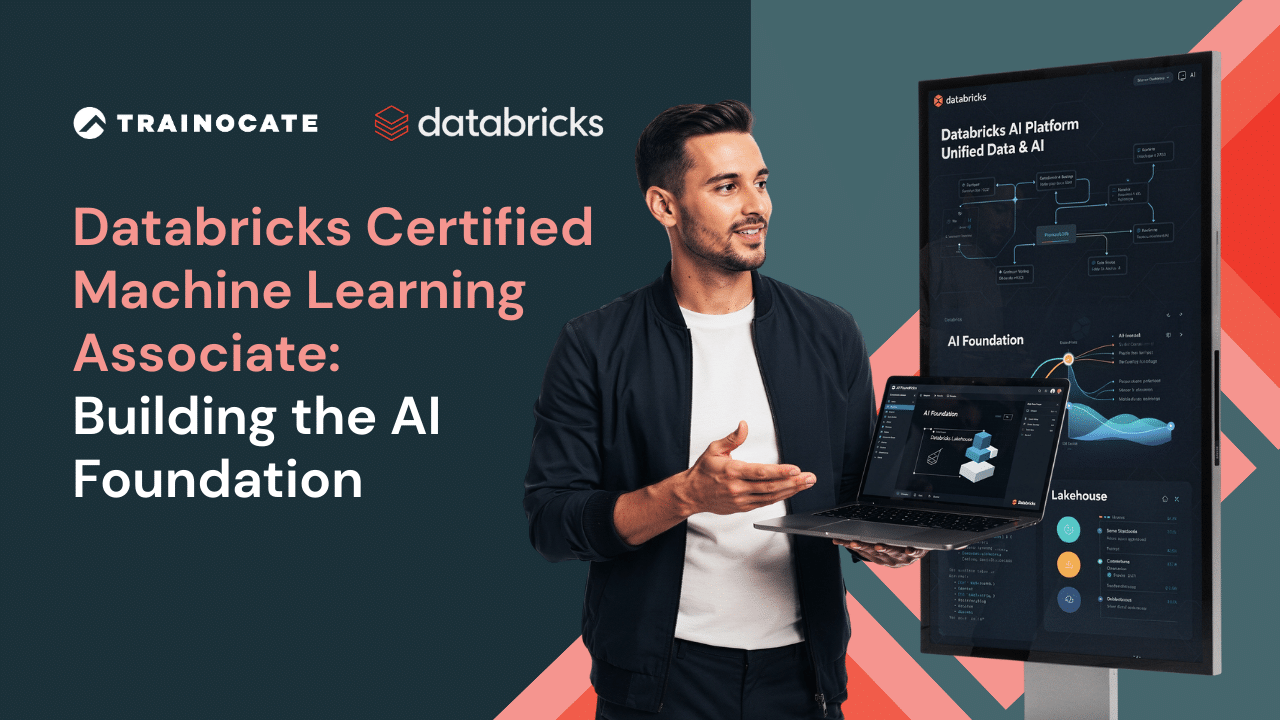
- Core ML: For teams building predictive models (churn, fraud), the Databricks Certified Machine Learning Associate: Building the AI Foundation article and the advanced (#article-6) provide the MLOps rigour needed to keep models stable in production.
3. The Analytics Engine: Business Intelligence
Data isn’t just for engineers. Business analysts need to query the Lakehouse directly to drive decision-making.
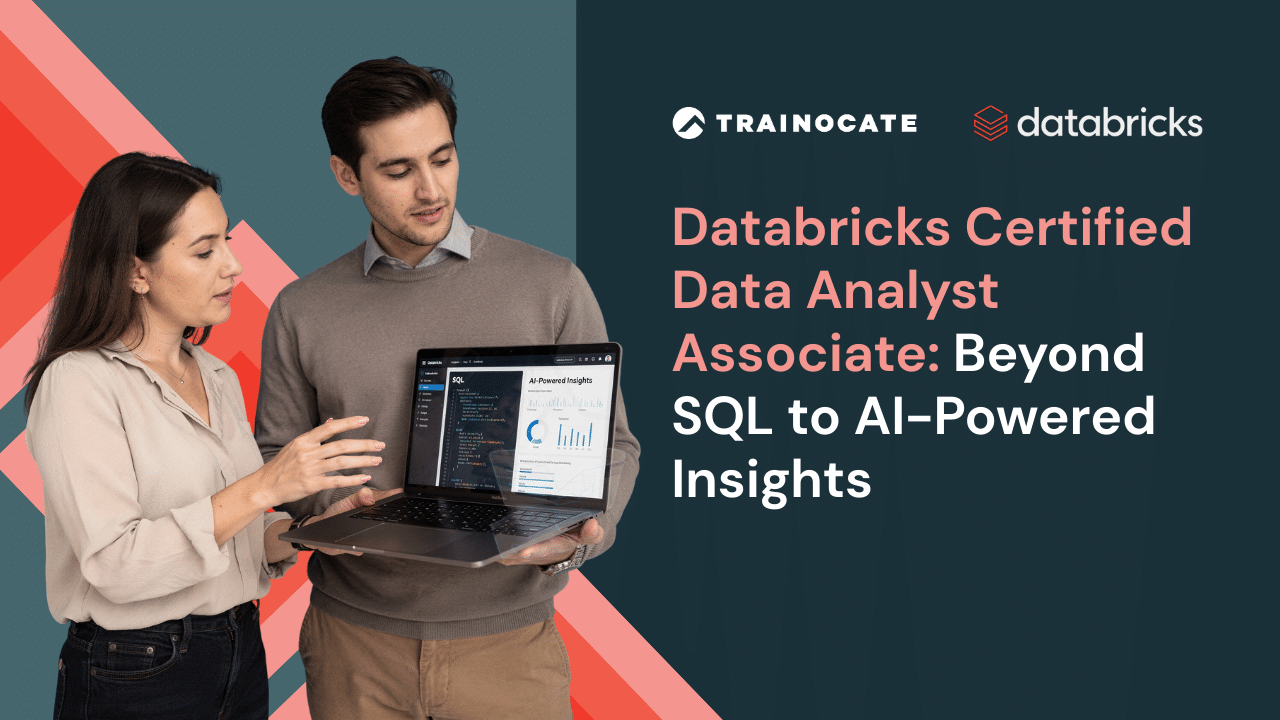
- The Analyst Track: The Databricks Certified Data Analyst Associate: Beyond SQL to AI-Powered Insights article empowers analysts to move beyond basic dashboards to AI-driven insights using Databricks SQL and Genie.
4. The Developer & Architect Tracks
For those focused on the code and the cloud infrastructure.
- Hard Skills: The (#article-8) confirms deep proficiency in the compute engine that powers it all.
- The Badges: For architects who need to understand the platform without writing code, we offer a guide on (#article-9), covering Platform Architect and Administration badges.
Conclusion: The Era of Data Intelligence
The transition to 2026 will separate organizations that have data from those that have data intelligence. The difference lies in the platform you choose and the people you train to wield it.
Databricks provides the architecture. Trainocate provides the expertise. The roadmap is clear; the only question is how fast you are willing to move.
Common Questions from Malaysian Professionals
Yes. As of early 2025, the Databricks Data Intelligence Platform is available in the AWS Asia Pacific (Jakarta) Region. This allows ASEAN businesses to meet strict data residency and low-latency requirements without sending data outside the region.
While the Data Engineer Associate remains the foundational “must-have,” the Databricks Certified Generative AI Engineer is seeing the fastest growth in demand. This is driven by the surge in enterprises moving from GenAI pilots to production RAG systems.
There is a significant premium. While general software engineers in Malaysia earn a median of roughly RM 6,500, Data Engineers with specialized skills (like Spark and Databricks) command a median of RM 9,000, with high performers earning significantly more due to the scarcity of these specific skills.
Ready to future-proof your workforce?