The Starting Line: Mastering the Foundational Data Analytics Skills That Get You Hired in 2026
The Starting Line: Mastering the Foundational Data Analytics Skills That Get You Hired in 2026
The race to a data-driven future is on, and in Malaysia, it’s happening at lightning speed as we covered in our Ultimate Guide to the Top Data and AI Skills for 2026 post. As we look toward 2026, it’s clear that every business, from bustling fintech startups in Kuala Lumpur to established manufacturing giants in Penang, is fundamentally rewiring its operations around data.
This isn’t just a trend; it’s a seismic economic shift.
The Big Data Analytics (BDA) market in Malaysia is on a trajectory to hit a staggering US$1.9 billion in 2025, a massive leap from US$1.1 billion in 2021.
(Source: MDEC IDC BDA Report)
This explosive growth, fueled by national strategies and massive private investment, has created a huge demand for professionals who can speak the language of data. However, a critical talent gap persists.
On average, workers can expect that two-fifths (39%) of their existing skill sets will be transformed or become outdated over the 2025-2030 period.
(Source: WEF Future of Jobs Report 2025)
For aspiring professionals, career-switchers, and even those in non-tech roles, this gap represents a clear and urgent opportunity. The starting line for a career in the data economy isn’t as far as you might think. It begins with mastering a core set of foundational skills that are universally in demand.
This article is your deep dive into the three non-negotiable, must-have data analytics skills that will get you hired in 2026.
Skill 1: SQL – The Lingua Franca of Data
Before any data can be analyzed, visualized, or used to train an AI model, it must first be retrieved from where it lives: a database. Structured Query Language (SQL) is the universal key to unlocking that data. Think of it as the official language of databases, and fluency is not optionalbut rather a prerequisite.
Almost every company, regardless of size or industry, stores its valuable information in relational databases. SQL is the standard language used to communicate with these systems, allowing you to ask questions and get specific answers. As a data analyst, your daily tasks will revolve around using SQL to:

Extract Data
Pull specific subsets of information from massive datasets.

Filter and Aggregate
Summarize vast amounts of information into meaningful metrics (e.g., calculating total sales per region).

Join Tables
Combine data from different sources to create a holistic view.

Update and Organize
Perform basic data cleaning and management tasks directly within the database.
Because of its fundamental importance, SQL proficiency is one of the most frequently tested skills in data analyst interviews.
Employers need to know you can confidently and efficiently access the data you need to do your job. The good news is that SQL has a relatively straightforward syntax, making it one of the most accessible and highest-impact technical skills you can learn to kickstart your career.
Skill 2: Python for Data Analysis
If SQL is the key to accessing data, Python is the versatile Swiss Army knife you’ll use to shape, clean, and analyze it. While other languages like R are also used in analytics, Python has firmly established itself as the dominant programming language for data professionals in Malaysia and across the globe.
Its popularity stems from its simple, readable syntax and, most importantly, its powerful ecosystem of open-source libraries designed specifically for data work.
For an aspiring data analyst, you don’t need to master all of Python. Instead, focus on the essential libraries that form the core of the data analysis toolkit:
Mastering these libraries will empower you to move beyond the limitations of traditional spreadsheet software and handle the large, complex datasets that modern businesses rely on.
Skill 3: Data Visualization & Storytelling
Uncovering a critical insight from data is only half the battle. The other half and arguably the more important part is communicating that insight to stakeholders in a way that is clear, compelling, and drives action.
This is the art of data visualization and storytelling.
A data analyst’s ultimate goal is to influence business decisions. A spreadsheet full of numbers rarely inspires change, but a well-designed chart or an interactive dashboard can illuminate trends and patterns in an instant.
For 2026, proficiency in market-leading business intelligence (BI) tools is a non-negotiable skill for any data analyst.
The two dominant platforms you need to know are:

Microsoft Power BI
As part of the ubiquitous Microsoft ecosystem, Power BI is a market leader for business analytics. It allows you to connect to various data sources, create powerful data models, and build interactive reports and dashboards that can be easily shared across an organization.

Tableau
Another industry giant, Tableau is renowned for its user-friendly drag-and-drop interface and its ability to create beautiful, intuitive visualizations. It empowers users to explore data and discover insights without needing to write code.
Learning these tools is about more than just making charts. It’s about learning the principles of visual analytics: choosing the right chart for your data, using color and layout to highlight key information, and weaving your findings into a narrative that answers critical business questions.
Top Certifications for Aspiring Data Analysts in 2026
Gaining these skills is the first step, but how do you prove your competence to potential employers? Professional certifications are a powerful way to validate your knowledge and make your resume stand out in a competitive market.
For those starting their journey, here are some of the most valuable and recognized certifications for 2026:
Frequently Asked Questions (FAQ)
Upcoming Free Virtual Event: Building Autonomous AI Agents with AWS
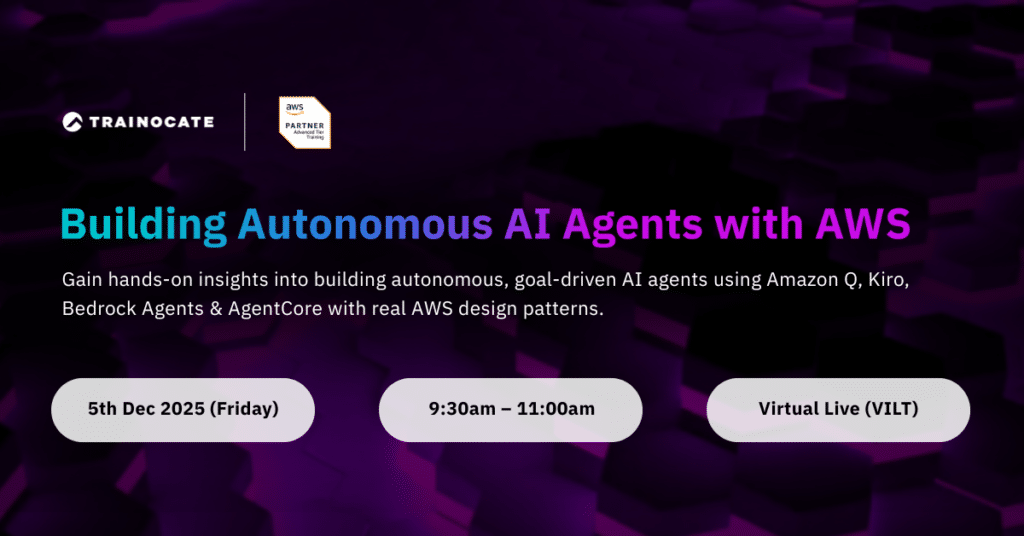
AI agents are redefining how businesses automate, adapt, and make decisions. Join our free virtual event to discover how AWS technologies are shaping the next generation of intelligent, self-directing systems.
- Learn how to design, deploy, and scale autonomous AI agents on AWS
- Explore real-world use cases across industries
- Understand how agentic AI boosts productivity and decision-making
- Gain insights directly from AWS-certified experts